
Introduction
Near the timeless Great Pyramid of Khufu at Giza, Egypt has unveiled what many are calling one of the most ambitious cultural projects of the modern era — the Grand Egyptian Museum (GEM).
This extraordinary museum, now open to the public, brings together around 100,000 artefacts that span over 7,000 years of Egypt’s history, from its pre-dynastic beginnings to the Greek and Roman eras.
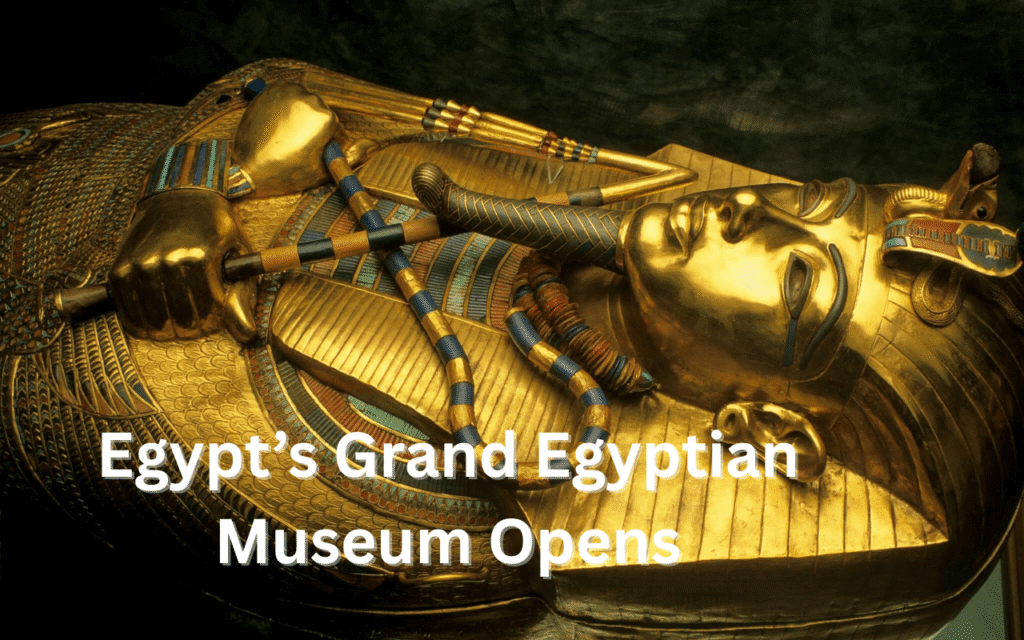
But the highlight of this vast collection is something truly historic — for the first time ever, every single item discovered in the tomb of King Tutankhamun is being displayed together. These include his world-famous golden death mask, regal throne, intricate jewellery, and the elegant chariots that accompanied the boy king to the afterlife.
A New Era of Egyptology
The museum’s creation is being hailed as a monumental achievement by Egyptologists. Many believe it strengthens Egypt’s position in calling for the return of key artefacts that were removed during colonial times, such as the Rosetta Stone from the British Museum.
Dr. Tarek Tawfik, President of the International Association of Egyptologists and a former head of the GEM, shared his vision:
“Since Tutankhamun’s tomb was discovered in 1922, only a fraction of its treasures were ever on display. I wanted visitors to experience the entire tomb — just as Howard Carter did a century ago.”
This ambitious vision has now been realized, making the museum a once-in-a-lifetime experience for visitors.
A Cultural Landmark Built for the Future
Costing more than $1.2 billion, the Grand Egyptian Museum is not just a collection of artefacts — it’s a testament to Egypt’s determination to celebrate and protect its ancient legacy. Spanning an impressive 500,000 square metres (roughly the size of 70 football fields), the museum’s modern design blends seamlessly with the surrounding desert landscape.
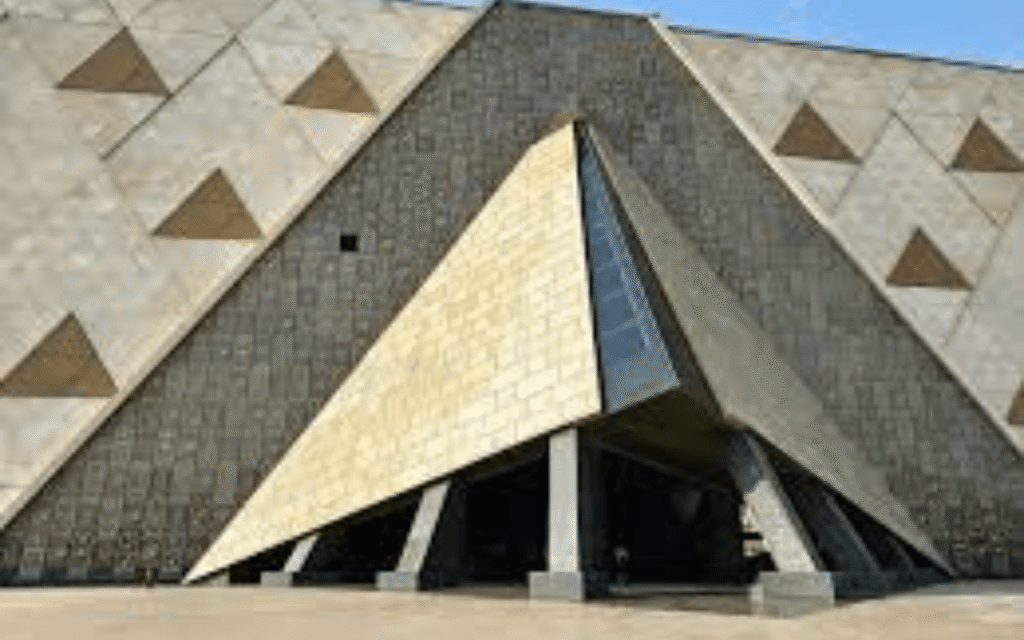
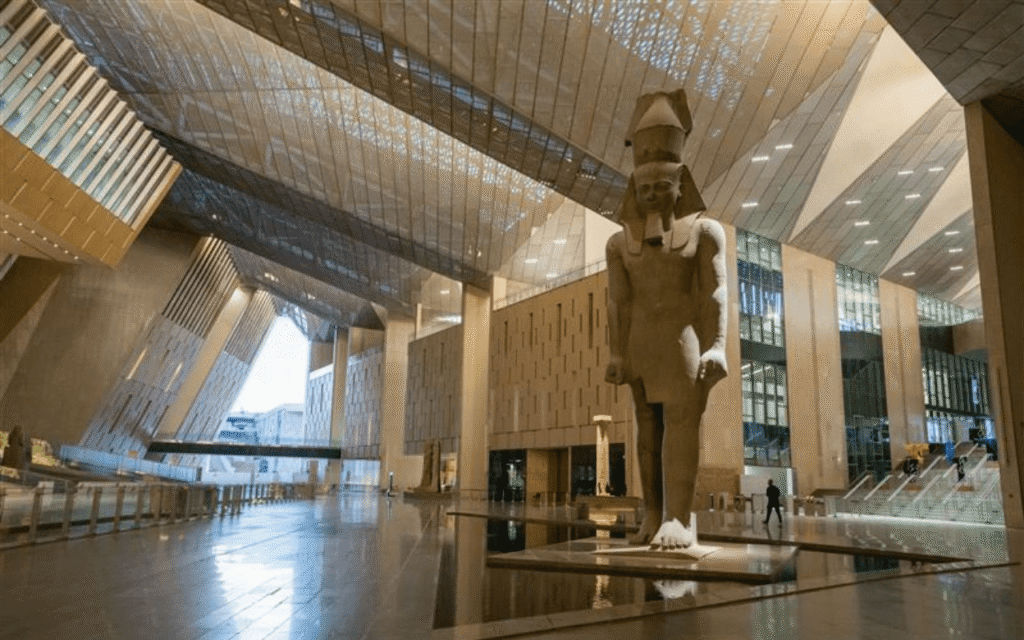
The massive complex features translucent alabaster walls etched with hieroglyphs, a pyramid-shaped entrance, and breathtaking architectural details. Visitors are greeted by a monumental 11-metre statue of Pharaoh Ramses II, relocated with precision from central Cairo in 2006, and a suspended 3,200-year-old obelisk dedicated to the same ruler.
Inside, a Grand Staircase lined with statues of ancient kings and queens leads to upper galleries, where visitors can enjoy a panoramic view of the Giza Pyramids through an enormous glass window.
A Boost for Tourism and National Pride
With its completion, the GEM is expected to draw up to eight million visitors annually, giving a major boost to Egypt’s tourism sector. For local guides and Egyptologists, this opening marks the beginning of a new golden age.
“The Grand Egyptian Museum will usher in a new era for Egyptology,” says Ahmed Seddik, a guide working near the Giza Plateau. “When people see the full Tutankhamun collection, the world will rediscover Egypt’s magic.”
Visitors from around the world are eagerly awaiting their chance to step inside. Raúl, a tourist from Spain, says, “It’s a must-see. You don’t get to witness history on this scale every day.”
Others recall visiting the old Egyptian Museum in Cairo’s Tahrir Square, describing it as “fascinating but crowded.” The new museum, they believe, offers a more immersive and organized experience worthy of Egypt’s royal heritage.
A Dream Realized Despite Decades of Challenges
The idea for the Grand Egyptian Museum was first proposed in 1992, with construction starting in 2005. Its completion has taken decades — nearly as long as it took to build the Great Pyramid itself — due to political turmoil, the Arab Spring, financial crises, the COVID-19 pandemic, and regional instability.
Dr. Zahi Hawass, Egypt’s renowned archaeologist and former Minister of Antiquities, expressed his joy at seeing the dream come to life:
“It proves that Egyptians are not just the heirs of this civilization, but also its best protectors.”
Dr. Hawass has also renewed calls for the return of three key artefacts: the Rosetta Stone from the British Museum, the Zodiac of Dendera from the Louvre, and the Bust of Nefertiti from Berlin.
“We’re not asking for them as restitution,” he says, “but as gifts of goodwill — symbols of respect for the civilization that gave so much to the world.”
Restoring Egypt’s Treasures — By Egyptians, for the World
The GEM is more than a museum; it’s a hub for research, conservation, and cultural exchange. Egyptian conservators have already restored hundreds of artefacts from Tutankhamun’s tomb — including his ornate textiles and ancient leather armour — with unmatched skill.
According to Egyptian law, only local experts are permitted to restore these national treasures, underscoring Egypt’s growing confidence in its own scientific and cultural expertise.
“Colleagues from around the world have admired the quality of conservation here,” says Dr. Tawfik. “This museum is a source of pride — not only for ancient Egypt, but for the Egypt of today.”
A New Beacon of Civilization
With its opening, the Grand Egyptian Museum stands as a bridge between past and present — celebrating a civilization that shaped humanity itself. For visitors gazing at Tutankhamun’s treasures, the message is clear:
Egypt’s heritage lives on, now preserved in the heart of its homeland.
Pingback: Former Miss USA Voigt Walks Out After Criticizes Miss Universe Exec Over “Dummy” Remark to Miss Mexico Bosch - Trending World News